Showcase your capabilities
If you design, build or supply Drone Signal Jammers, create a profile to showcase your capabilities and connect with visitors who have an active requirement for your solutions.



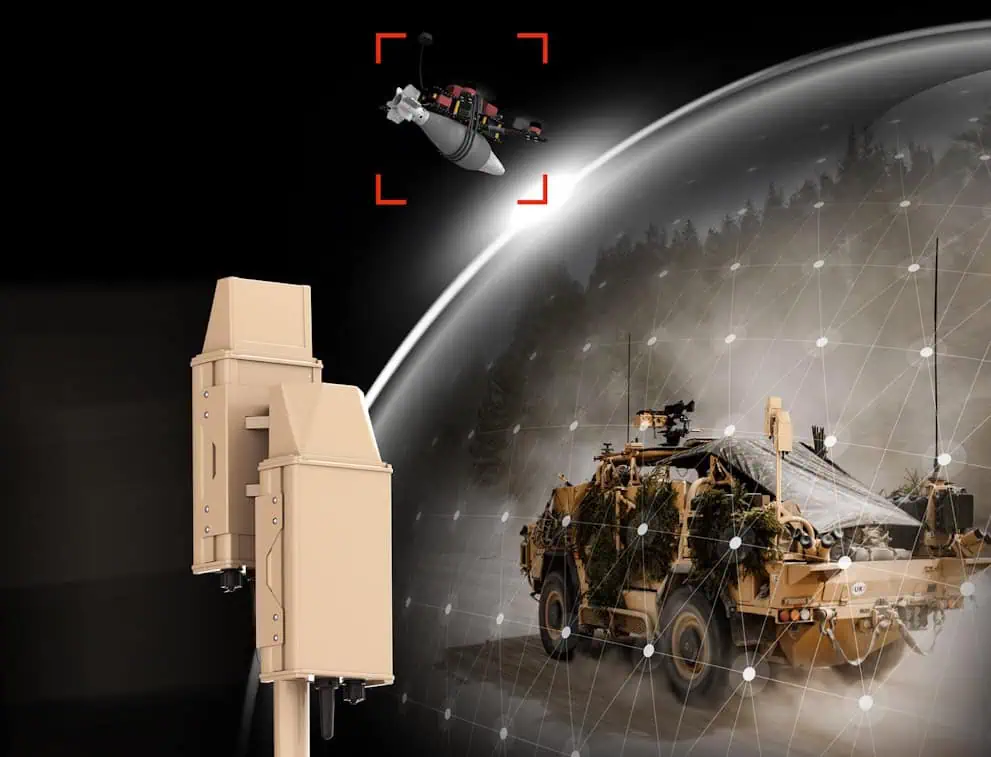
Drone jammers are electronic countermeasure systems designed to disrupt the Radio Frequency (RF) communications and GNSS signals used by Unmanned Aerial Vehicles (UAVs). Military drone jammers support Counter-Unmanned Aircraft Systems (C-UAS) operations by interfering with compatible command links, video transmissions, telemetry, and satellite navigation.
This page features suppliers of drone signal jammers, supporting the protection of military installations, deployed forces, convoys, and naval vessels.
Read the Technology Overview
Electronic Countermeasures (ECM) & RF Jamming Technology for Protection from RCIED and Drone Threats

If you design, build or supply Drone Signal Jammers, create a profile to showcase your capabilities and connect with visitors who have an active requirement for your solutions.

Drone jammers are electronic countermeasure systems designed to disrupt the Radio Frequency (RF) communication and satellite navigation signals used by Unmanned Aerial Vehicles (UAVs). By transmitting interference across selected frequency bands, drone jamming systems can prevent compatible aircraft from receiving operator commands, navigation signals, or other wireless communications. These technologies form part of Counter-Unmanned Aircraft Systems (C-UAS) used to mitigate unauthorized or hostile drones in military environments.
Military drone jammers are available in portable, vehicle-mounted, and fixed-site configurations, providing directional or omnidirectional coverage depending on operational requirements. Their effectiveness depends on the target’s communication architecture, signal characteristics, and onboard failsafe behavior. Drone signal jamming equipment may also be integrated with drone detection radar, RF detection, and electro-optical tracking systems to support coordinated counter-drone operations.
Drone jammers use RF transmitters, signal-generation hardware, power amplifiers, and antennas to produce interference that disrupts specific communication and navigation functions. Control electronics manage transmission parameters, while the equipment’s supported frequency bands, transmitter design, and antenna configuration determine its operational capabilities. The principal functions include:
The effects of drone signal jamming depend on the aircraft’s control architecture and programmed response to interference. Some drones may initiate failsafe procedures, such as hovering, landing, or returning to a designated location, while others can continue autonomous missions without continuous operator communication. Jamming emissions may also affect nearby friendly communications or navigation systems, making electromagnetic compatibility an important operational consideration.
Fixed-site anti-drone jamming systems can support the protection of military installations against unauthorized surveillance and aerial threats. When integrated with drone detection and tracking sensors, these systems can disrupt compatible hostile drone communications within designated defensive areas. Directional coverage and controlled activation are particularly important around airfields and command facilities, where interference with friendly communications and navigation services must be carefully managed.

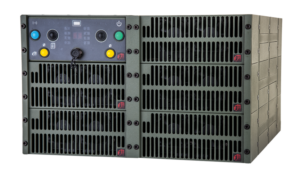
ANCILE Counter UAS RF Shield by Allen Vanguard
Portable and vehicle-mounted UAV jammers support deployed personnel and mobile formations operating in areas exposed to hostile drones. Handheld and backpack systems provide dismounted forces with electronic countermeasure capabilities, while vehicle-mounted equipment can offer broader coverage and integration with onboard C-UAS sensors. Military drone jamming solutions must balance transmitter performance, power availability, mobility, and electromagnetic compatibility with friendly tactical communications.
Naval drone jammers can be incorporated into shipboard Electronic Warfare (EW) and force protection systems to counter hostile unmanned aircraft operating near military vessels. These systems may provide directional or multi-sector RF coverage and integrate with surveillance radar, electro-optical sensors, and combat management systems. Maritime installations require particular attention to antenna placement, vessel structures, corrosion resistance, and potential interference with onboard navigation and communications equipment.
Hostile reconnaissance drones can transmit video, imagery, and telemetry to remote operators, potentially exposing military positions and movements. Drone radio jamming can interfere with compatible control and data links, reducing an operator’s ability to receive information or issue commands. Systems targeting video downlinks may disrupt live surveillance feeds, although aircraft equipped with onboard recording or autonomous mission capabilities can continue collecting information despite losing communication with their operators.
First-Person View (FPV) attack drones present a significant threat to military personnel, vehicles, and defensive positions. Specialized counter-drone jammers target compatible wireless control and video transmission links used by these aircraft. Portable electronic countermeasures are particularly relevant to dismounted forces, while vehicle-mounted systems can support mobile protection. Effectiveness depends on the drone’s communication technology, including its operating frequencies, signal resilience, and onboard control behavior. Fiber-optic-controlled FPV drones do not rely on conventional RF control links and therefore cannot be disrupted through control-link jamming alone.
Drone jamming technology employs several interference techniques to degrade wireless communication or satellite navigation reception. Different approaches offer advantages in frequency coverage, transmitter resource allocation, and responsiveness to detected signals, with the most suitable method depending on the target communication architecture and operational environment.
| Jamming Technology | Operating Principle | Characteristics and Considerations |
| Broadband Noise Jamming | Transmits interference across a relatively wide frequency range. | Provides coverage across multiple frequencies but distributes available transmitter power across the occupied bandwidth, potentially reducing interference strength at individual frequencies. |
| Narrowband and Frequency-Selective Jamming | Concentrates RF interference within selected frequencies or relatively narrow bands. | Directs transmission resources toward identified channels but requires suitable knowledge or detection of the target signal’s operating frequencies. |
| Swept-Frequency Jamming | Moves an interference signal across a defined frequency range. | Covers multiple frequencies sequentially, with effectiveness influenced by sweep timing, signal bandwidth, and the target receiver’s behavior. |
| Reactive and Signal-Responsive Jamming | Activates or adjusts interference in response to detected RF activity. | Can reduce unnecessary transmission and support targeted engagement, although effectiveness depends on reliable signal detection, classification, and response speed. |
| Adaptive and Software-Defined Jamming | Uses configurable signal processing and RF hardware to modify interference parameters. | Supports flexible frequency selection and waveform control, with available capabilities determined by the underlying hardware and software architecture. |
| Multi-Channel and Simultaneous RF Jamming | Employs multiple transmission channels or RF chains to interfere with several bands concurrently. | Supports simultaneous interference with multiple communication links, although operation across several bands increases demands on power, amplification, filtering, and thermal management. |
Drone frequency jammers are configured to interfere with specific communication and navigation bands rather than all possible wireless signals. Military C-UAS systems may need to address commercial communication links, proprietary drone protocols, and satellite navigation receivers, each presenting different requirements for frequency coverage and interference management.
Supported frequency bands, interference bandwidth, and antenna characteristics are important specifications when comparing drone radio frequency jammer equipment. Multi-band capability can address several communication technologies but does not guarantee successful mitigation against every drone operating within those frequency ranges.
RF jamming is one of several technologies used to mitigate hostile unmanned aircraft. Other counter-drone approaches operate through different mechanisms and may complement electronic interference within an integrated defensive system, particularly against drones with autonomous navigation or interference-resistant communication links.
Layered C-UAS architectures can combine RF jammers with complementary mitigation technologies, allowing military operators to select an appropriate response based on threat characteristics, operational constraints, and engagement authorization.
Developments in electronic warfare and RF signal processing are influencing the design of military drone jamming systems. Increasingly diverse drone communication technologies, interference-resistant links, and autonomous aircraft are driving demand for more adaptable countermeasure architectures capable of addressing evolving aerial threats.
These developments are supporting the integration of drone jamming equipment into more adaptable military C-UAS networks. However, operational effectiveness continues to depend on the target aircraft, the electromagnetic environment, and the conditions under which countermeasures are deployed.


 Searching Companies & Products